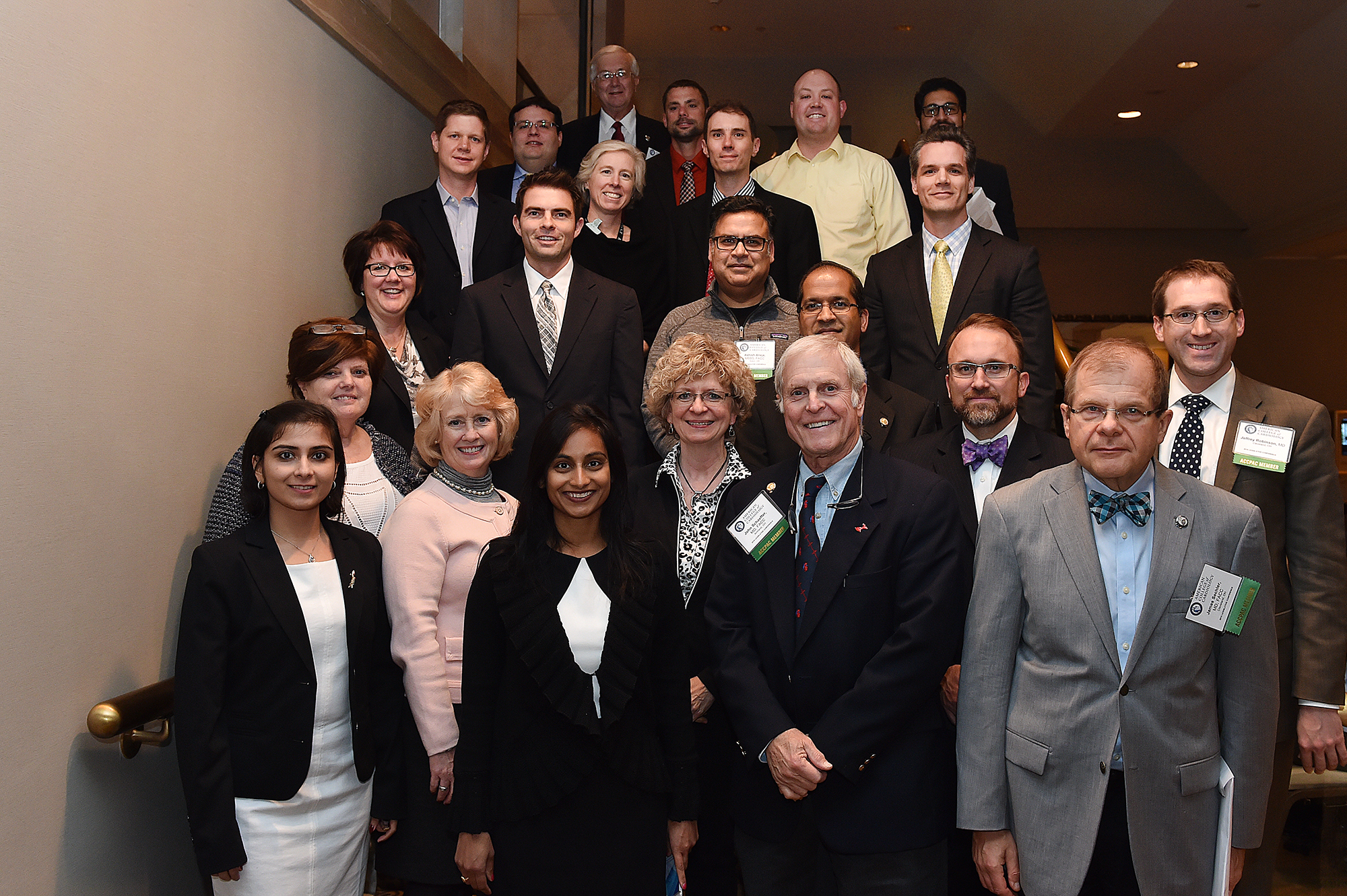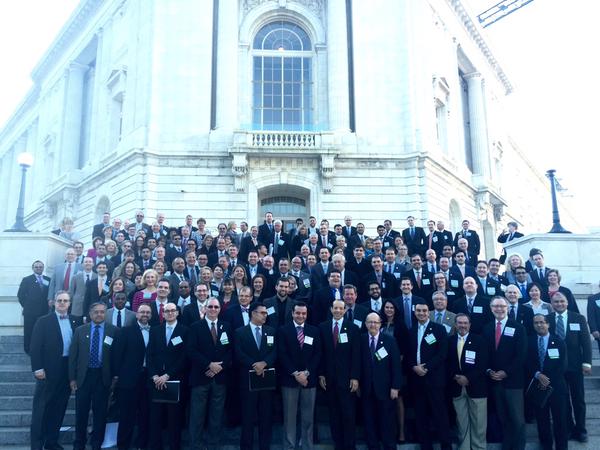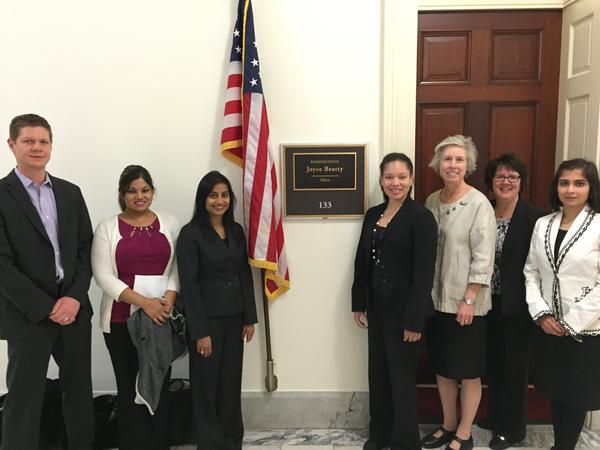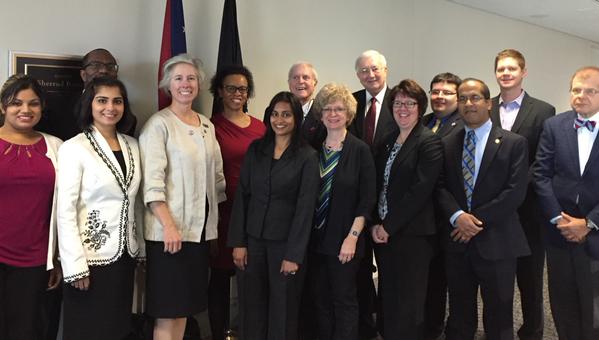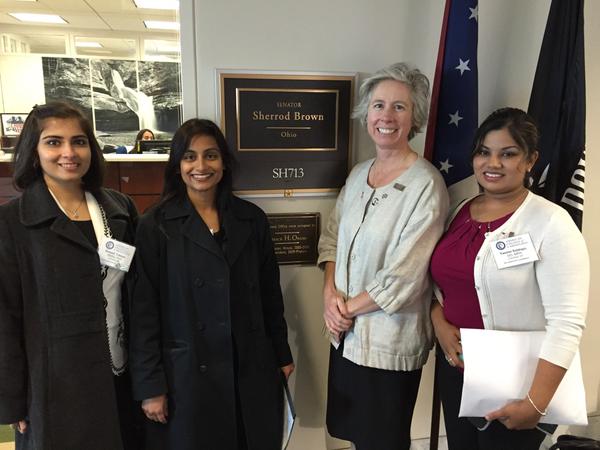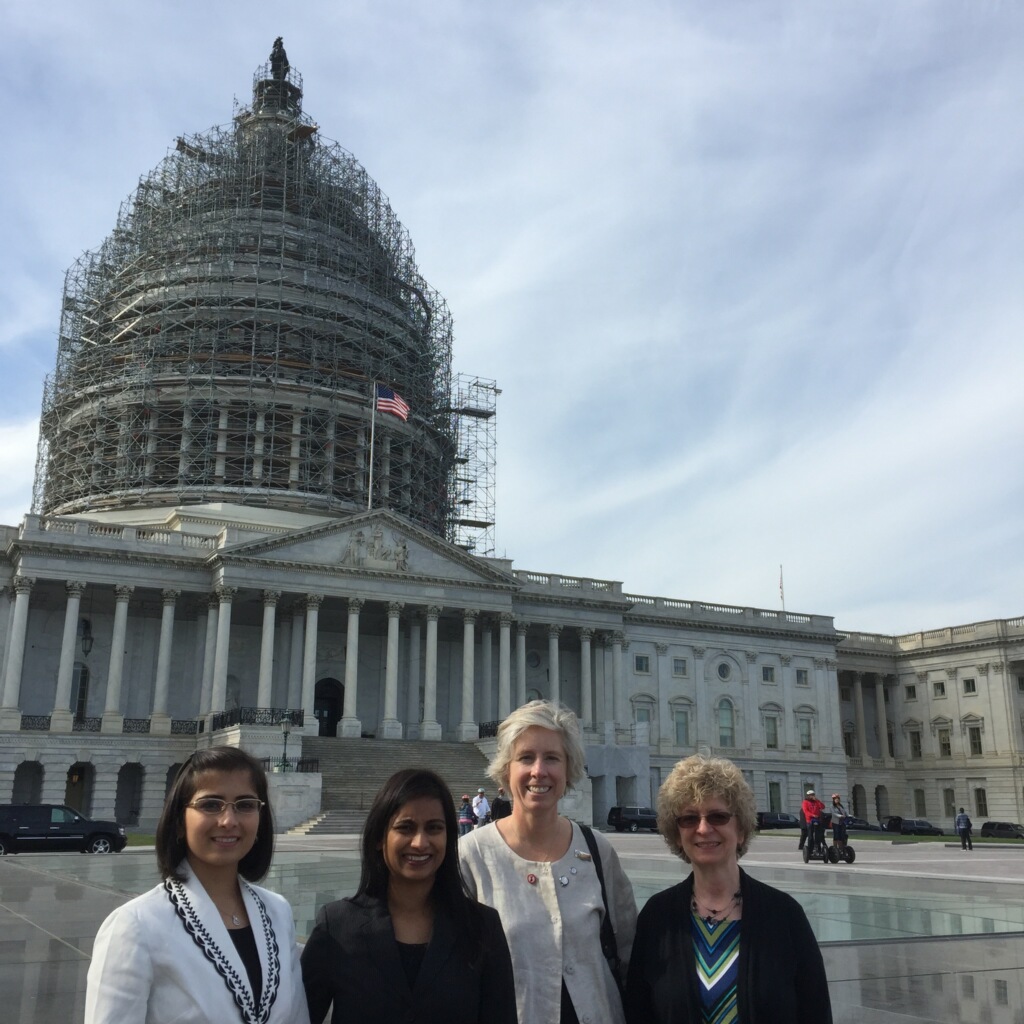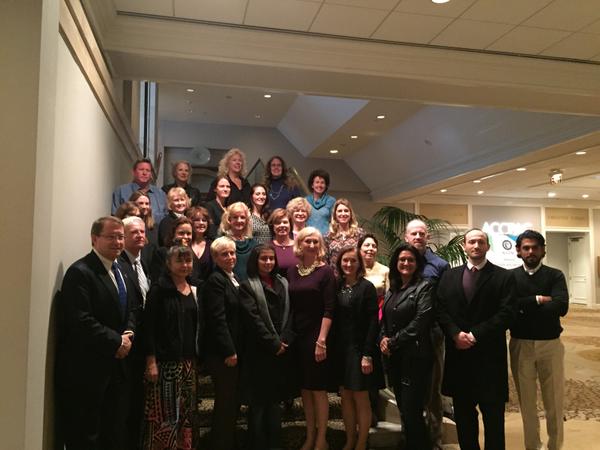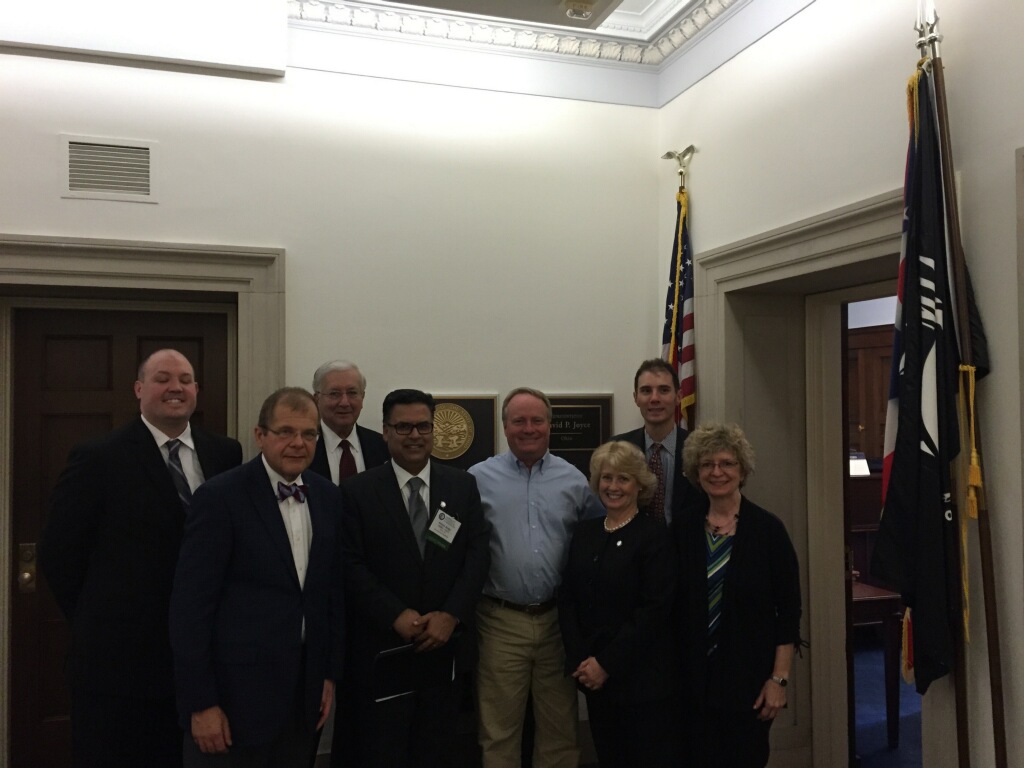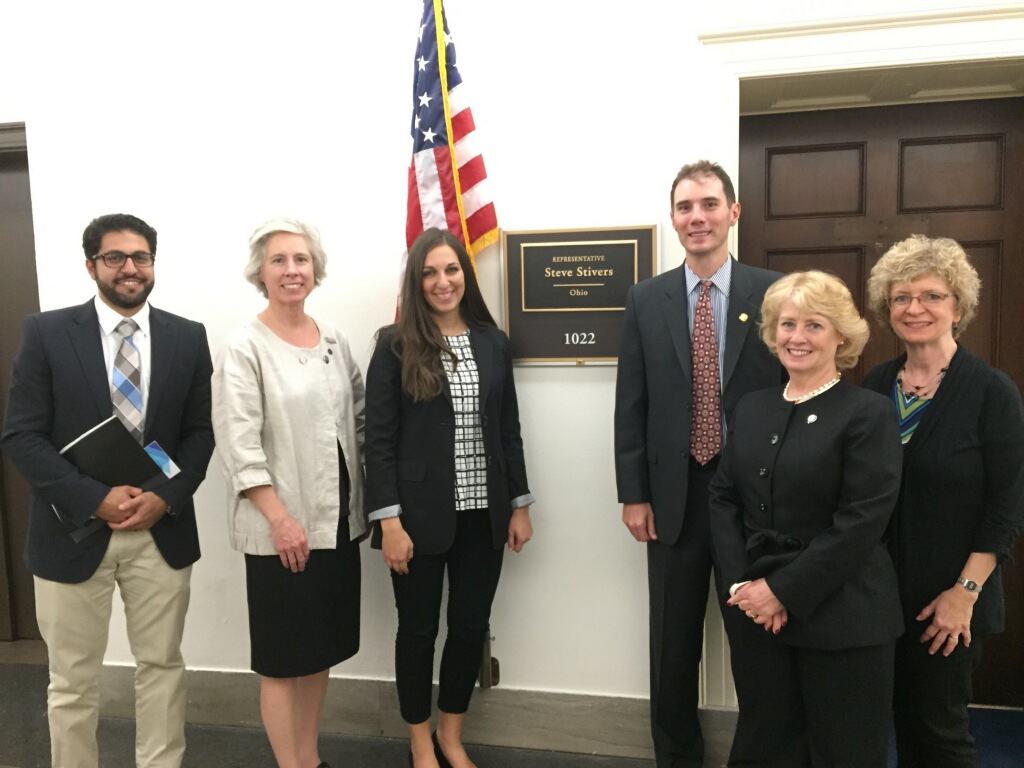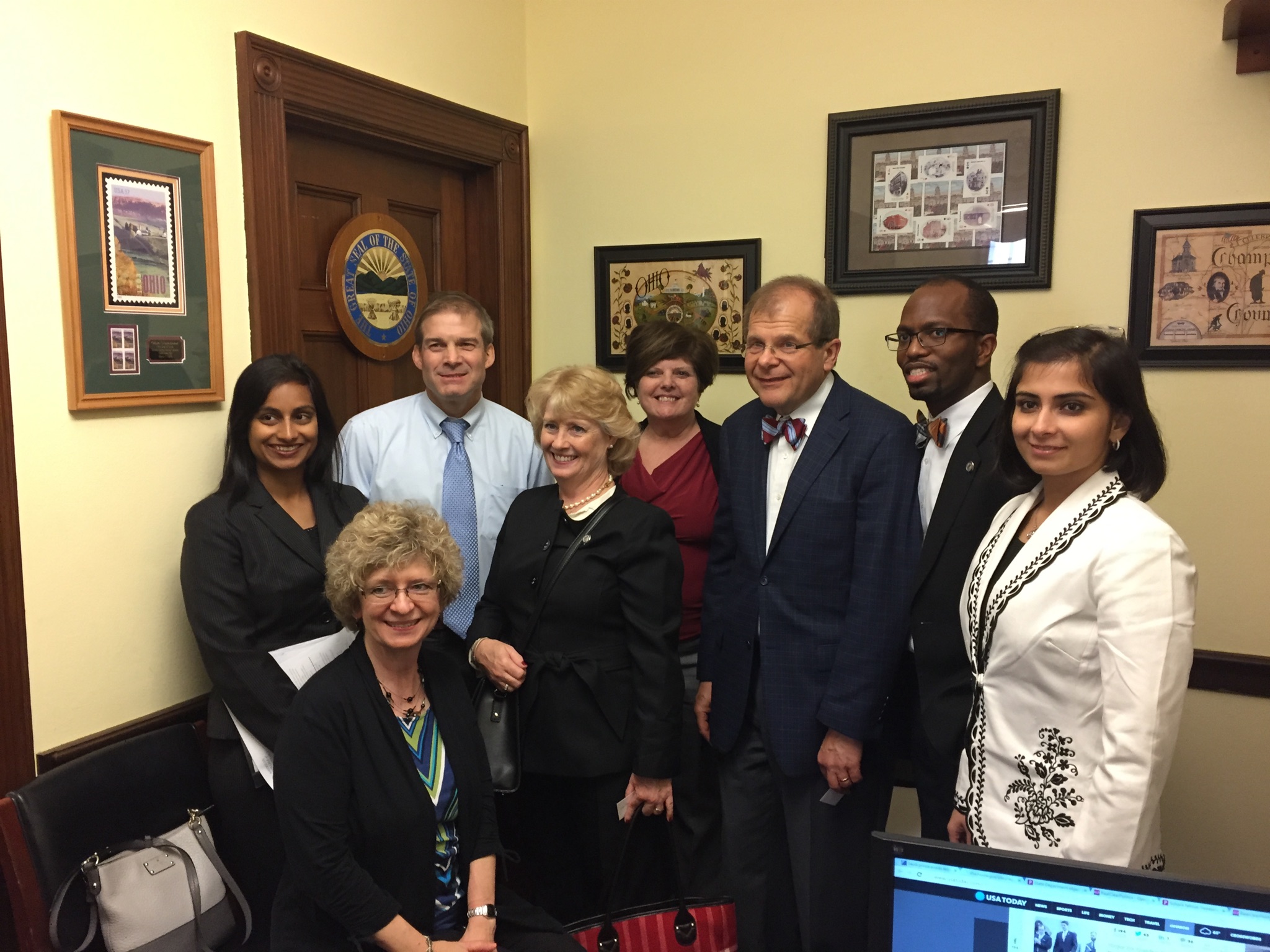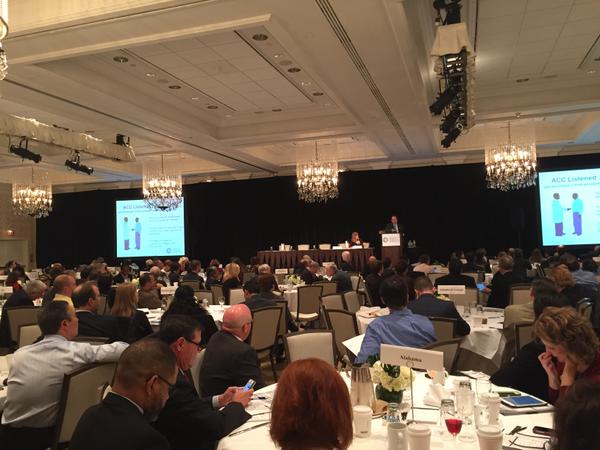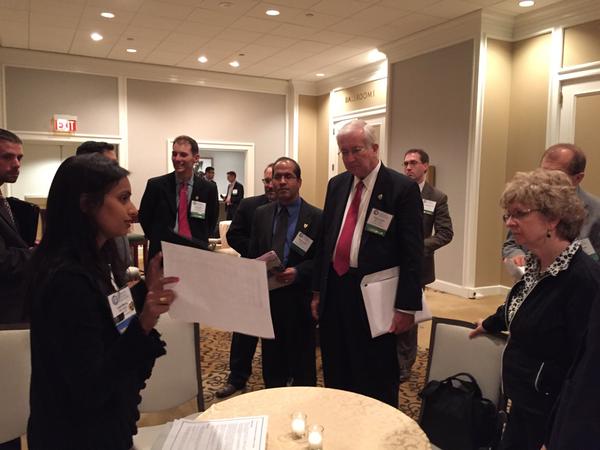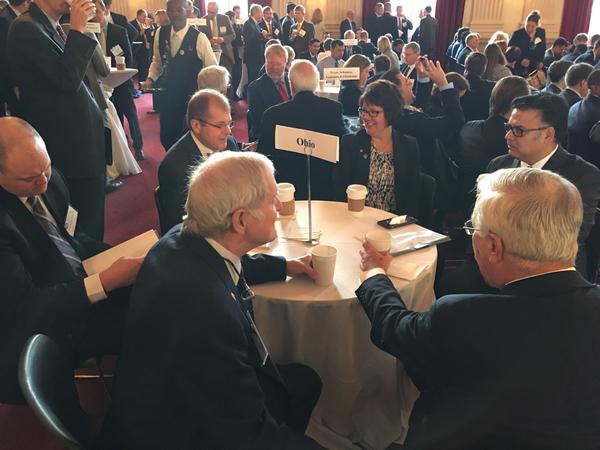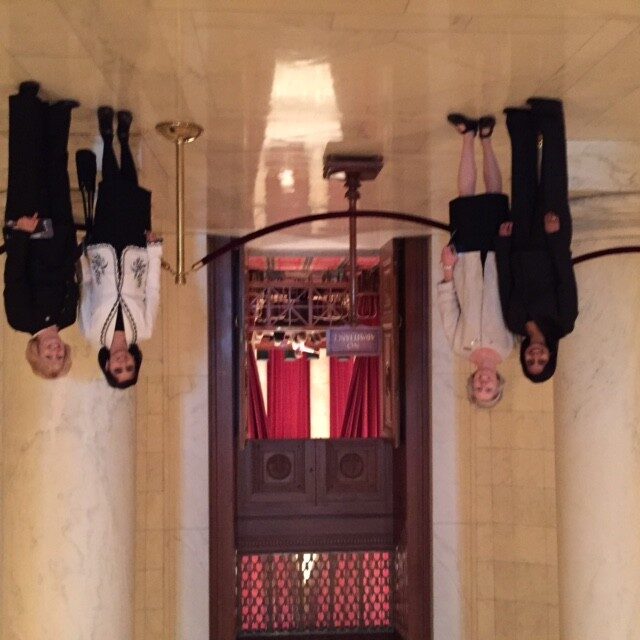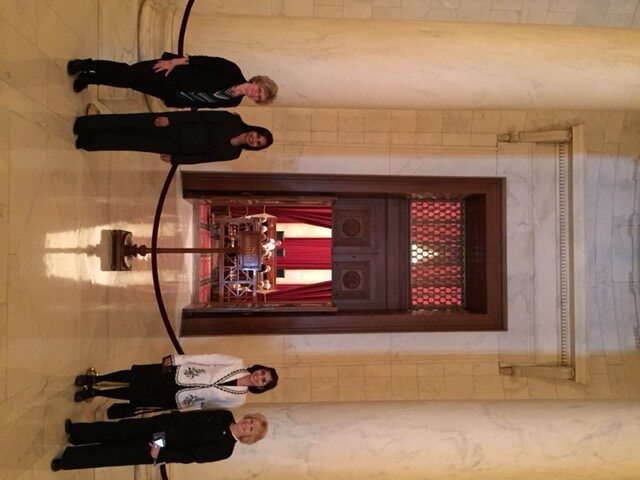
Twenty-eight Ohio-ACC members headed to Washington, DC, for the ACC Legislative Conference and to meet with Congress. Attendees participated in a full lineup of sessions with the more than 400 attendees to effect change. Members learned more about the repeal of the Sustainable Growth Rate (SGR) by enactment of the Medicare Access and CHIP Authorization Act of 2015, release of new Meaningful Use regulations and ICD-10 implementation.
Attendee Reports
The Ohio-ACC provided travel stipends for some Ohio-ACC members who attended. Here are their reflections of the experience:
Anne R. Albers, MD, PhD, RVT, FACC
The springtime Ohio State Legislative Conference gives a great introduction to advocacy work on behalf of the ACC. At the October 18-20 national conference the ~400 attendees learned current issues faced by our representatives. Participants spent Sunday evening listening to Dr. Krauthammer talk about politics, in particular the current issue of House Speaker change and the basics of US government. Monday lectures ranged from MOC to updates from ACC lobbyists, and also an entertaining and useful presentation on how to interact with the representatives. Tuesday morning’s Women in Cardiology breakfast provided a rare and special opportunity for women cardiologists to network and introduce themselves, as well as hear from women who work on Capitol Hill for women representatives. In addition to work focus, the topics ranged to health issues faced by women (as legislated by our government). Specific meetings on Tuesday were another great learning experience – from listening to Dr. Schaeffer pitch ACC priorities to Sen. Sherrod Brown’s assistant, to hearing Anna Broz promote cardiac rehab to Steve Stivers’ legislative aide (“You may not have had any experience or reason to consider cardiac rehab but you will”). The Ohio delegation promoted heart health and CV team health to our Senators and multiple Representatives. Reflecting on the conference, I think of us as a patient – planning & waiting for our appointments, our brief time to state our case, hoping to communicate and at some level resonate with someone who has power or ability to effect change (aka the legislator/provider). In that sense the Ohio CV care team was strong and cohesive in advocating for Cardiovascular Health. Another summary/impression of the conference (patient education oriented summary) is at www.hearthealthdocs.com.
Ashish Aneja, MD, FACC
The ACC Legislative Conference was perhaps one of the better CV conferences I have attended. The size and scope of the conference is focused allowing for truly personalized attention to attendees. The organizers of the conference pay very close attention to the agenda with repetition of the most important advocacy issues so that participants become really well apprised of the issues, allowing for forceful advocacy on the Hill. The ACC staff also seem to work very hard behind the scenes to develop bipartisan relations with Senators, Congressmen/Congresswomen and their aides, which facilitates smooth and pleasant interactions. One leaves this conference happy, with enhanced dignity and pride, feeling a sense of real accomplishment. I particularly enjoyed personally meeting with Congressman Joyce and also the aides to Senator Portman, Congresswoman Fudge, and Congressman Gibbs. It was also interesting and fun to utilize social media, in particular Twitter, to share thoughts and ideas. I would be delighted to attend again next year if given the chance. Thank you ACC for the wonderful opportunity.
Barbara Bell, CNP
I am happy to share what I learned from my attendance at the ACC Legislative Conference in DC. First and foremost I was reminded of the professionalism of my colleagues in medicine, nursing and administration. I am proud to be a part of a team that is always looking to do what’s best for the patient. I was pleased to read the policy position paper on team based care, and I believe that the ACC is a leader in promoting interdisciplinary care. The experience on “the Hill” was eye opening. I learned that advocacy really does work and that it is an honor and responsibility to advocate for our patients and our science. I enjoyed learning about the issues and the process. I would like to thank the Ohio Chapter for making my experience possible. I plan to encourage my colleagues to attend. It’s an experience we can all learn from.
Shyam Bhakta, MD, FACC
The 2015 American College of Cardiology Legislative Advocacy Conference was an excellent meeting. The meeting enjoyed its largest attendance – over 400 attending physicians, physicians-in-training, and members of the cardiac care team came to Washington from all over the United States as well as Puerto Rico, Canada, and Mexico. With the passage of the MACRA act earlier this year, this has put the perennial Sustainable Growth Rate (“SGR”) controversy behind us and allowed the ACC to legislate on other important issues. The issues of payment reform, electronic health technology, and funding of biomedical research will dominate the health care policy and legislative landscape in the years to come. Attending the legislative conference provided me with first-hand, up-to-date knowledge on these issues and the opportunity to meet one-on-one with my elected officials to advocate on behalf of my patients and the practice of cardiovascular medicine.
Anna M. Broz, RN, MSN, CNP, AACC
I was honored to attend the national ACC Legislative conference in Washington, DC on October 18-20, 2015. I have had the privilege of attending this important conference in the past, but this was a pivotal year as the SGR was not on our “ask” list of talking points with the legislators. However, there were important public policy issues that are critical due to the challenges in healthcare delivery and reimbursement. The state of Ohio continued to lead with a large delegation of the cardiology team with representation from cardiovascular healthcare professionals, including cardiologists, cardiovascular team members, fellows in training and practice administrators. The CVT session on Sunday afternoon emphasized the critical element of team based care and stressed that the patient is the center of the delivery team. The agenda was packed with dynamic speakers, such as Dr. Charles Krauthammer on Sunday evening, followed by presenters on Monday who gave insight into the legislative process and topics in regulatory affairs. The importance of team based care was highlighted by the request to cosponsor H.R. 3355/S. 488 which is a bill that would expand access to cardiac rehabilitation by allowing physician assistants, nurse practitioners, and clinical nurse specialists to supervise cardiac and pulmonary rehabilitation programs. The legislators and legislative aides were so positive and responsive to this issue as well as MACRA, EHR usability and additional funding for medical research. It is only through our continued presence, persistence and visibility at the local, regional and national level that our voices are heard and quality of healthcare is preserved.
Patrick Daly, MD
Returning to Washington DC this year for the 2015 ACC Legislative conference, I experienced first-hand the impact of our advocacy efforts on our country’s health policy. Since last year’s conference, the unacceptable Medicare Sustainable Growth Rate (SGR) program was repealed and replaced with MACRA. ACCPAC provided exceptional instruction this year on the pertinent policy details of MACRA. As a result, I feel informed on the policy and able to assist my colleagues in anticipating the changing landscape of medical payments. My visits to the Capitol Hill offices afforded me the opportunity to meet with health policy staff experts. We focused our discussion on the importance of ongoing collaboration between legislators and the ACC as it relates to optimizing alternative payment models, achieving electronic medical record interoperability, restoring NIH/FDA funding levels and allowing advanced practice professionals to supervise cardiac rehab. I look forward to continuing this work to ensure progress on these issues in the coming year.
Attendance at the 2015 Legislative Conference in Washington continues to grow, with nearly 400 attendees visiting the offices of Senators and Representatives on Capitol Hill. The largest delegation once again came from Ohio where 28 Ohio-ACC members attended. I was most impresed with the number of cardiology fellows at the meeting. Travels stipends from their institutions, the Ohio-ACC, and the national ACC helped defray travel expenses and make attendance possible. The PAC dinner was the highlight of conference. Charles Krauthamer, MD, a television pundit and columnist was the keynote speaker. He gave us an insightful look at the current state of affairs in Washington including the candidates in the presidential race. In person, he appears younger, more energetic, and and charming compared with his staid and dour television persona. The didactic part of the conference was highlighted by talks by Kim Ross on the art of successful lobbying, Matthew Press from CMS Innovation on alternative payment models, and Bruce Siegel, MD, CEO of America’s Essential Hospitals on the transition to value-based care. The final day of the conference was spent on Capitol Hill where physicians, nurses, fellows, and practice administrators told Congress about the problems faced by the cardiovascular care team in caring for patients. We stated that for MACRA to succeed, medical specialty societies should help to develop criteria defining quality and data reporting insure that a streamlined transition to new payment models will occur. We touted the benefits of cardiac rehabilitation and to expand access, requested that trained nurses be allowed to assume a supervisory role. We asked Congress to increase funding for the NIH and graduate medical education. Finally, we discussed the need to promote interoperability of electronic health care systems. Overall, this was a highly successful conference. I encourage anyone with an interest in cardiovascular healthcare to attend in 2016.
Nader Makki, MD
As this way my first time attending the ACC legislative, I didn’t know what to expect. It was definitely an eye opener as it gave me insight into the upcoming legislative changes. I was surprised how welcoming the senators and legislative staff were to me even though I am still a fellow in training. The lectures regarding MACRA bill and new CMS payment changes were very informative. In addition, the conference provided a great venue to interact with cardiologists from all over the countries and establish networking relations. At the end of the trip, I defintely felt that I had a better understanding of the intricacies governing upcoming healthcare changes. However, at the same time I left the conference feeling more anxious about the impact of these payment changes on practice of medicine in the years to come. I would definitely recommend this conference to any current fellows in training as it gives us an idea about the future job market and allows us to be better equipped to deal with future challenges.
Antonio L. Perez, MD, MBA
As a cardiology fellow interested in academic medicine and health policy/management, the ACC Legislative Conference has become one of the most educational conferences I attend. In the 2 years I have attended, I have learned a tremendous amount about how to engage, inform and advise congressmen, senators and their staff. I have broadened my perspectives by learning about issues important to ACC advocacy and meeting highly skilled and dedicated ACC staff. Invited speakers have provided excellent information about the most important national health policy challenges – payment reform initiatives after the SGR repeal, NIH funding, ACA implementation, and FDA policy. The meeting has allowed me to network with leaders from CMS, MedPAC, hospital groups and physicians from around the country, often providing unique insights not available in medical journals and popular media. I have particularly enjoyed meeting and working with other colleagues from Ohio, who represent a diverse group of cardiovascular team members from academia and private practice. The conference provides an opportunity to reflect about important healthcare challenges together with the full range of clinicians and administrators who dedicate their lives’ work to providing excellent patient care. I would not have been able to attend and benefit from this excellent conference without support from the Ohio ACC. I am extremely grateful.
Jeffrey A. Robinson, MD
The 2015 ACC Legislative Conference was wonderfully energetic. While this was highlighted (and punctuated) by the address from Dr. Charles Krauthammer, the many fellows-in-training present were particularly excited to learn about the politics of healthcare alongside cardiologists, cardiovascular team members, and the ACC PAC team. As a physician, this event made me proud of our profession. More often, doctors need to be reminded that our experience and expertise is valued by lawmakers. This was modeled well by the seasoned cardiologists who have been long-time advocates on Capitol Hill and in the statehouses for patient care and physician practice. I extend my sincere thanks to the Ohio-ACC Chapter for the travel award to attend this conference.
Kelly J. Scheiderer, RHIA, MHA
Thank you for the opportunity to attend the ACC Legislative Conference in Washington, DC. The conference was very informative, and it was an excellent way to meet with others who work in the area of cardiovascular medicine. I was proud to represent Ohio-ACC and to be able to make a significant impact with 28 people from our state. It was helpful as our group met with La Tasha Lee (Sherrod Brown’s office), Donnica Hawes-Saunders (Joyce Beatty’s office), and Abigail Finn (Parick Tiberi’s office), and we shared the main issues and provided specific examples to help provide clarity of the support we need. I am also very appreciative of the support from the Ohio-ACC to allow me to attend. Thank you.
Sandra Smith, MSN, CNP, AACC
I would like to take the opportunity to once again thank the Ohio-ACC for sponsoring my trip to Washington D.C. for the annual legislative day on Capitol Hill. I have been fortunate enough to attend the last 5 programs and have gained much knowledge of the workings of out legislators. Through this participation I have made contacts with several Ohio legislatures. This will help in the future to promote ACC’s agendas and cardiac health for Ohio residents as well as translate to more broader goals of US cardiac health. These small steps with attendance go on to making decisions that are in the best interest of consumer healthy choices. Thank you for sponsoring my attendance. I would not be able to participate without the travel stipend.
Montoya Taylor, MD
As a physician, the first thing we learn in our training from basically day one is to do no harm. As a matter of fact, it is commonly part of many medical schools white coat ceremonies where an oath to patient care is recited in unison. Unfortunately while going through medical school and even residency, I did not realize how much legislation is generated that affects the practice and delivery of healthcare. While these governmental actions are often meant for positive changes, there is some legislation that while hopefully developed with good intention, ends up with negative results. So instead of having a wait and see attitude, as cardiologists in America we should have a take charge approach. Because in a country where heart disease is the #1 cause of death, we should do everything we can to improve the health of our patients. This must also entail making sure that whatever legislation is passed in regards to healthcare is only the best legislation.
Bob Williams, MBA, BSN, RN-BC, AACC
I would like to thank the Ohio ACC for the 2015 travel stipend. Our annual legislative conference continues to be an opportunity for the cardiovascular team to come together to share a common message with our legislators. It is of upmost importance for ACC members to be active in continuing to shape the landscape of healthcare. Healthcare is ever changing and we cannot afford to stand idly by. Working together, we are sure to impact lives of individuals who we will never meet.
Photos